Air Quality in Your City: How to Read the Data and Protect Yourself
During winter months, air quality in cities across Serbia becomes one of the most critical topics. Thick fog mixed with smoke from private heating and exhaust gases often creates unhealthy living conditions. Understanding measurement units and air quality indices is the first step toward protecting your health.
What are PM2.5 and PM10 Particles?
Particulate Matter (PM) consists of microscopic particles floating in the air. PM10 are particles with a diameter smaller than 10 micrometers, while PM2.5 are even smaller—less than 2.5 micrometers. Due to their small size, PM2.5 particles are the most dangerous as they can penetrate deep into the lungs and enter the bloodstream, causing various health issues.
Understanding the AQI Index
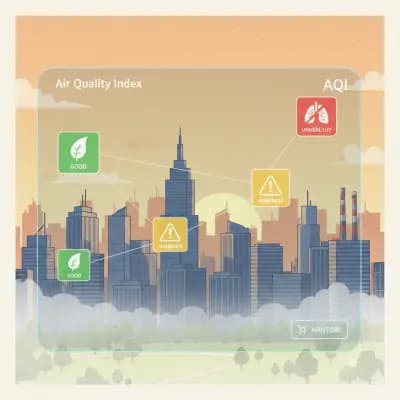
AQI (Air Quality Index) is a standardized scale used to display the degree of air pollution. The scale ranges from 0 to 500. Values up to 50 are considered good (green), while anything over 150 represents unhealthy air for the general population (red). If the AQI exceeds 300, the air is considered hazardous to the health of all citizens (purple).
Practical Tips for High-Pollution Days
When measurements are in the 'red' or 'purple' zones, experts recommend several precautions: Avoid outdoor physical activity (running, exercising), keep windows closed during peak pollution periods (usually early morning and evening), and use air purifiers indoors if possible.
Track Live Data on obavesti.rs
Our portal integrates real-time data from monitoring stations across Serbia. Using our interactive map, you can see the current air quality in your neighborhood and plan your activities. Our mission is to provide you with all vital service information, including environmental data, to help you make the best decisions for yourself and your family.